The Listing
By Savannah MacPherson Thompson

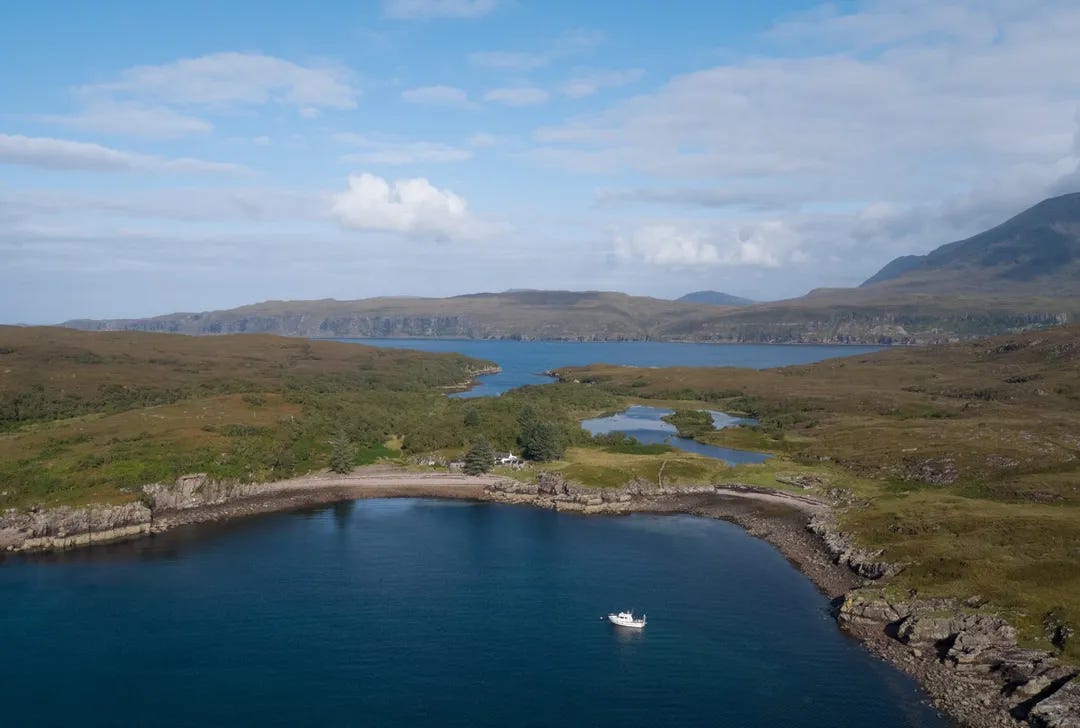
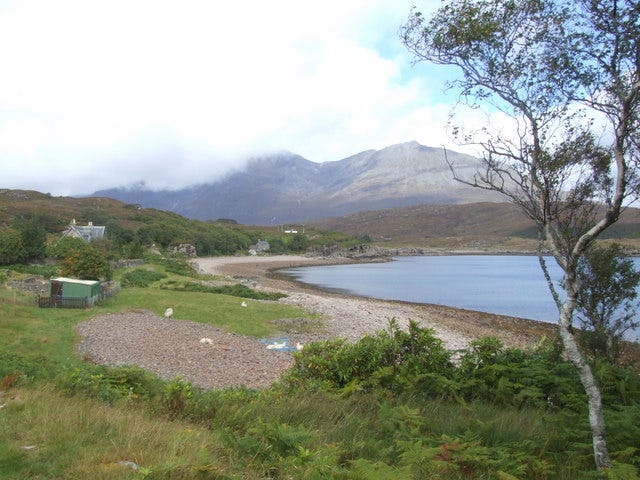
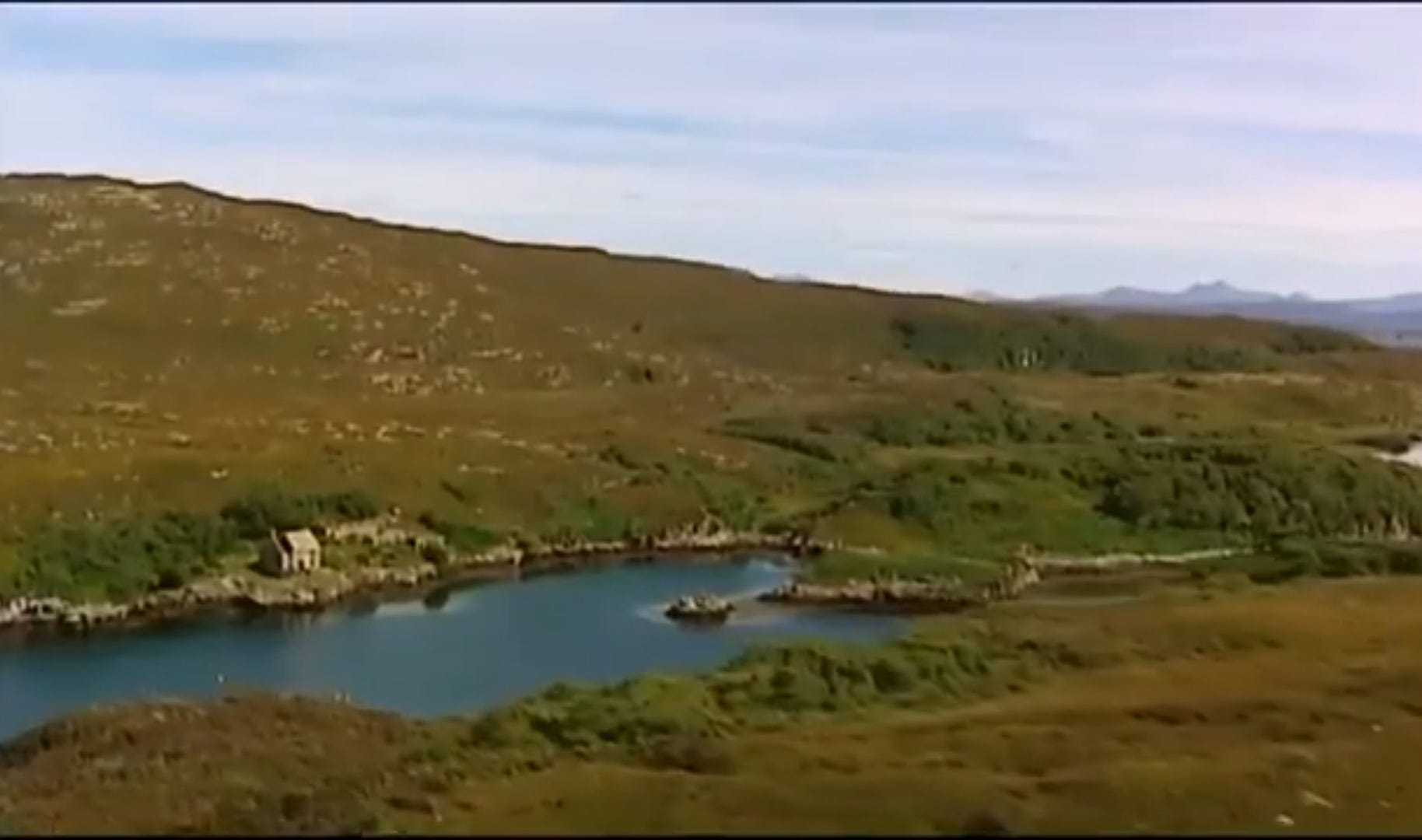
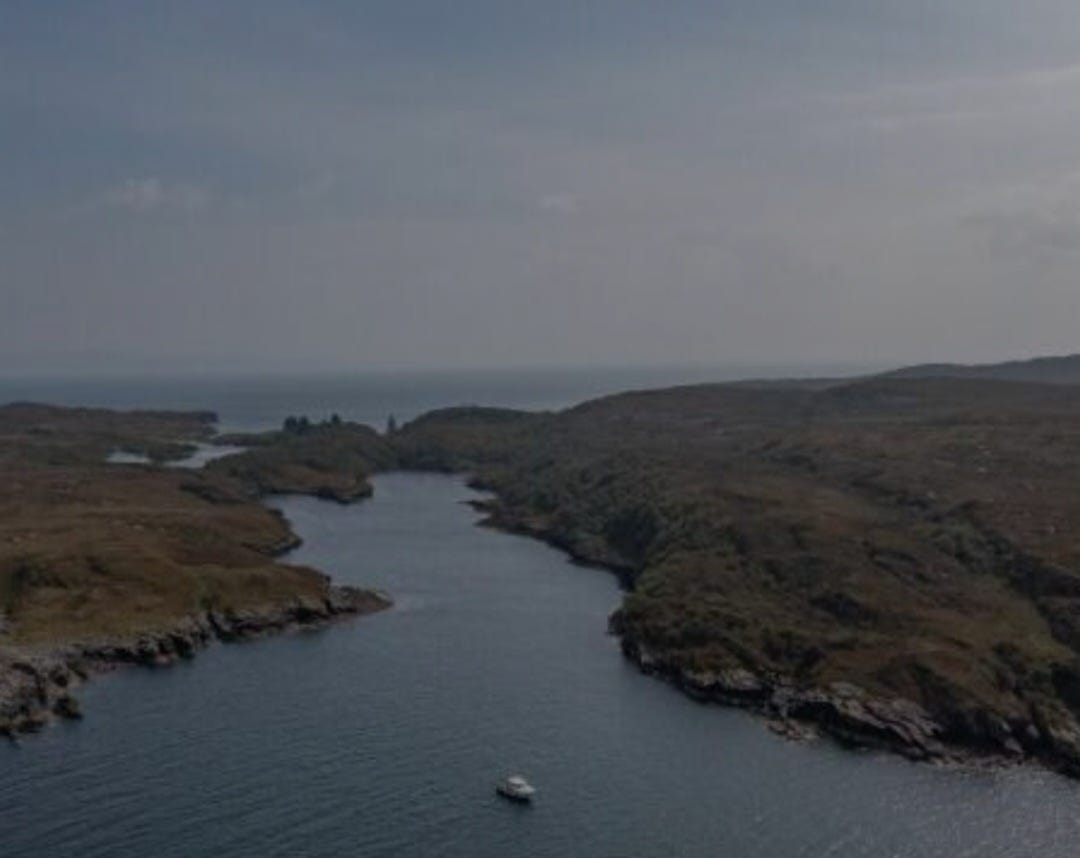
Take a long look at this gorgeous piece of land.
Squint a little and you'll see a tiny white house at the centre of the landscape.
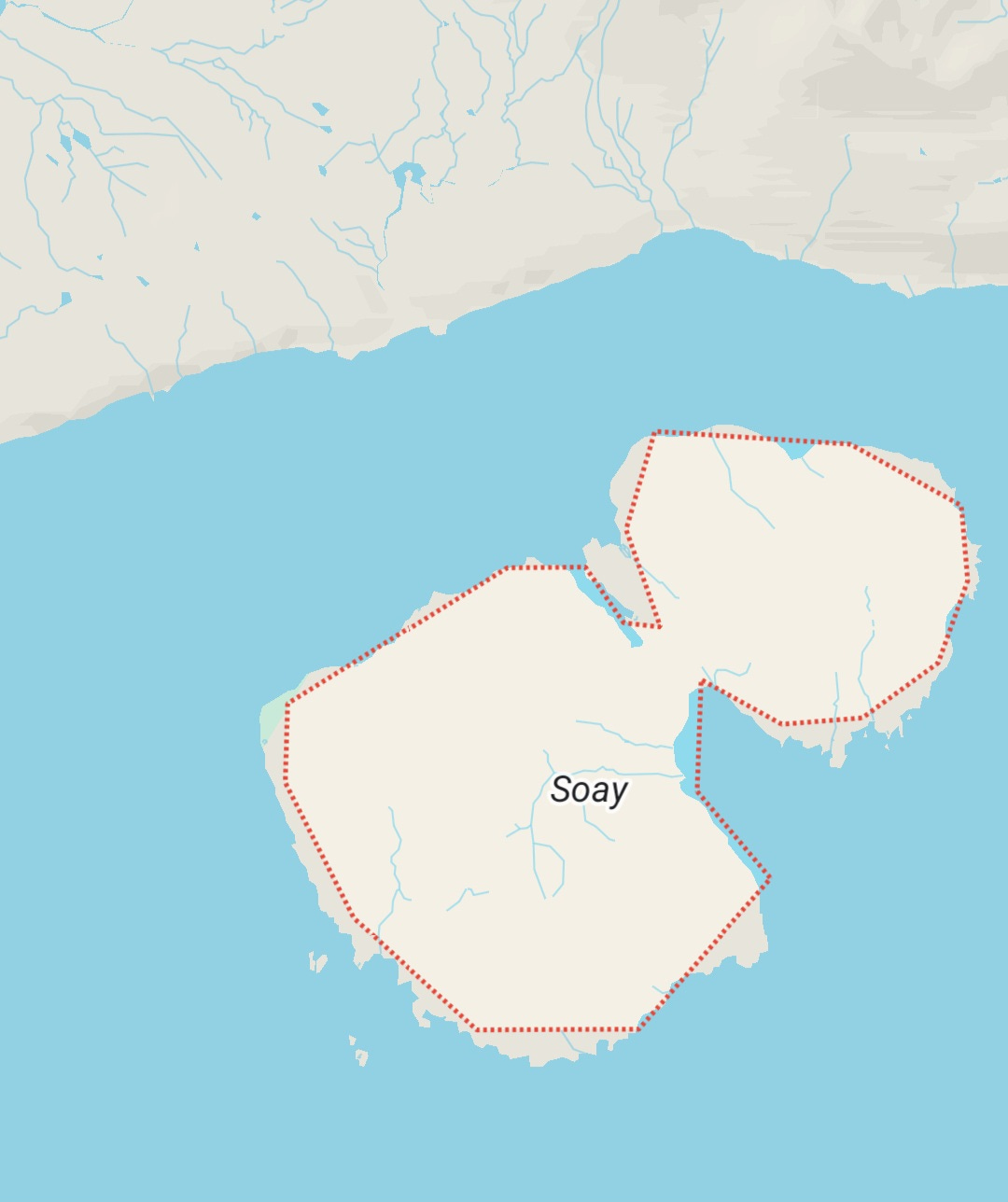
This is an island off the coast of the Isle of Skye, in Scotland, called Soay.
It is currently listed for sale with Strutt and Parker in Edinburgh for £ 925,000.
I have been looking at photos of the island for days now, and I cannot stop.
Not because I have £ 925,000. I don't.
But because the Gillies family of Portree on Skye's coast, five kilometres away in the distance, were my direct ancestors in the 1830s. And my MacPhersons of Ardnamurchan looked across at this same coastline from their lives on the mainland for hundreds of years prior. The MacNeils of Barra sailed these waters for thousands of years. The MacDonalds of Sleat stood on the shore directly opposite this island and called it home from the time of its Nordic naming, around 700AD.
All my kin. My Scottish ancestral kin.
I now live in a hemisphere far from my lineage - poor servants that were forced onto ships from their homes in Portree, Isle of Skye, during the Highland Clearances of 1837 - in exchange for a colonial settlement they then also called Skye on the Hunter River, in New South Wales, Australia.
We weren't always poor. My Scottish lineage runs to Lords and Ladies, Barons and Baronesses, a Chancellor, a parliamentarian, the illegitimate firstborn of a King; sometimes all in the same person.
It has been my dream to live on my ancestral land.
And apparently I can - for £ 925,000 - which is about AUD $1.8 million, or USD $1.24 million.
There is just one catch.
I would be sharing it with the rest of the world whether I liked it or not. No matter how they advertise the listing.
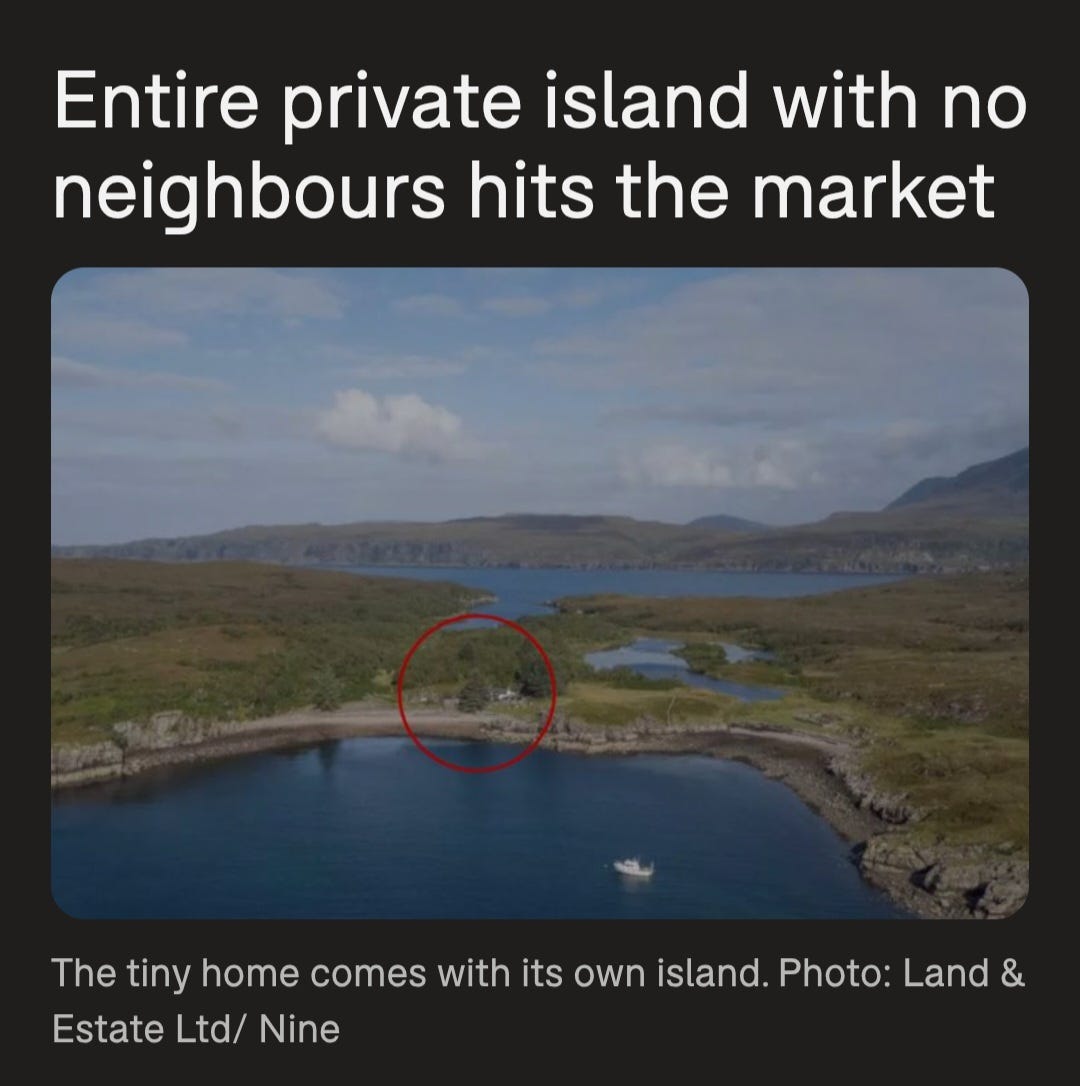
The Private Island That Isn't Private
There is - for want of a better description - a quaint law in Scotland that would offend the sensibilities of many, if not most, American, Canadian, British or Australian buyers of Soay Island.
The experience of the asset isn't yours exclusively.
You pay for the responsibility. Everyone else gets the enjoyment for free.
You buy the asset. You pay for the conservation, the maintenance, the rates, and the public have the right to come and experience the landscape, photograph it, walk on it, camp on it. On their schedule, not yours.
You buy into a legally constrained position in a publicly accessible landscape, with partial ownership rights, no infrastructure, and a marketing narrative that doesn't match the legal reality.
That's what's for sale.
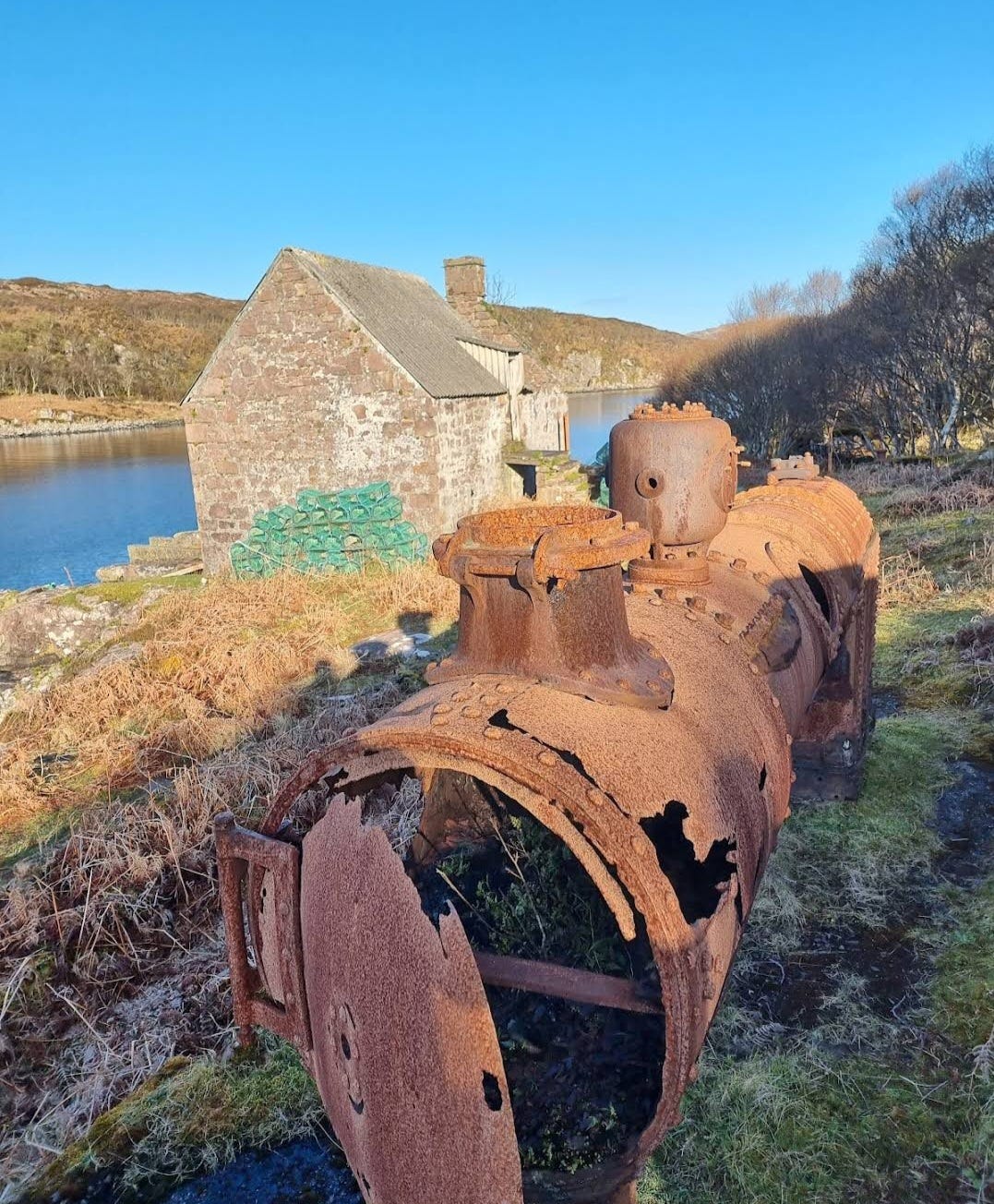
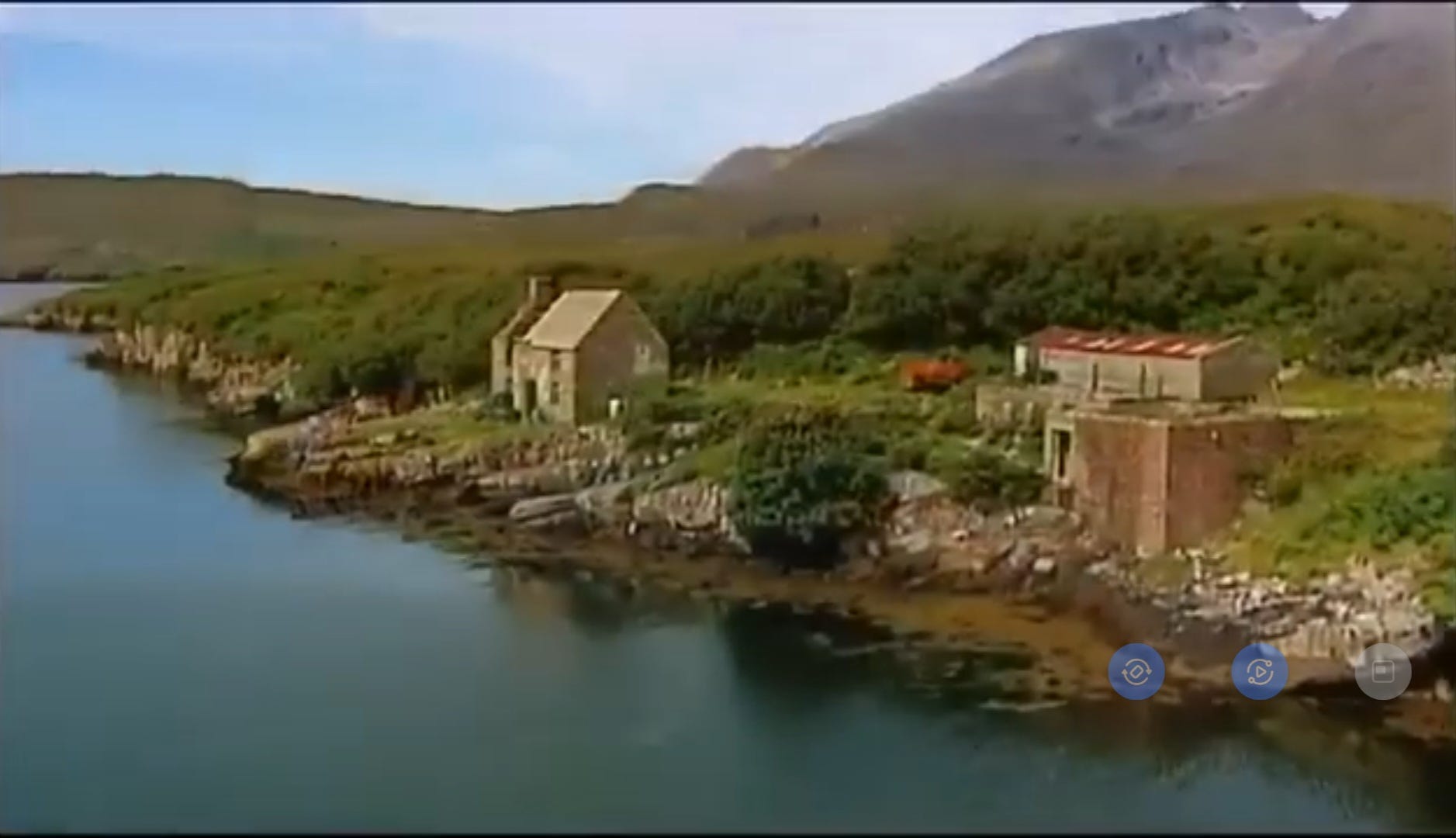
The house is a shell, built in the early 1880s, sitting unattended for 30 years in brutal Atlantic winters. In 1883 a witness before the Napier Commission testified that the tide had destroyed a house on that island within living memory. The island hasn't changed. The Atlantic hasn't changed.
The gap between what the listing claims and what the Scottish Land Reform Act of 2003 provides is real and documentable. The Act gives the general public the right to access the land.
You read that right.
You can buy land, but you cannot buy solitude, control, or perceptual isolation in the way the marketing implies.
What protects buyers is disclosure law, not agent goodwill. And that's exactly why the disclosure question matters.
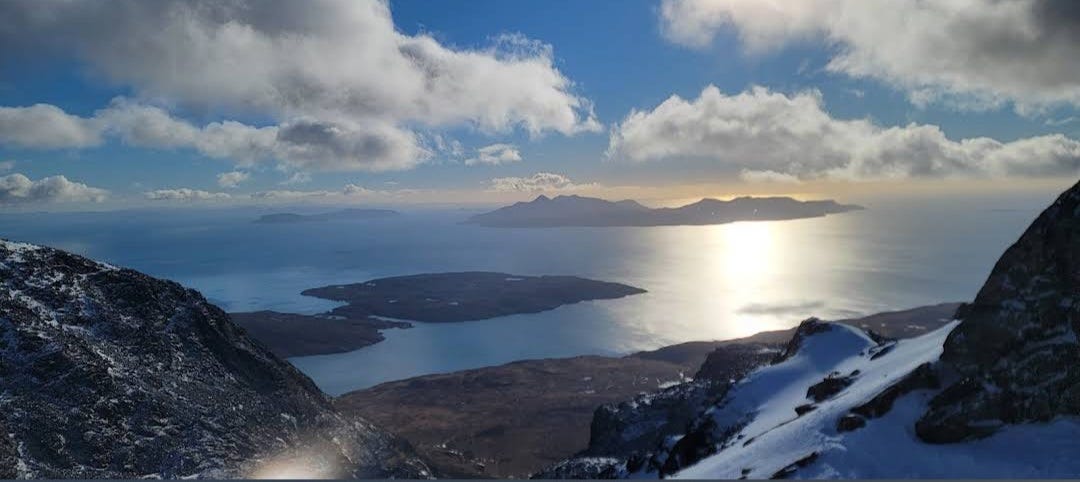
The Disclosure
The island has defeated romantic buyers before. Many arrived with enthusiasm and capital and left with neither. That's documented history, and relevant context.
It's a property for sale at a price that makes community buyout very difficult. That's worth saying, because the sense of history you'd be buying into - which is actually what you'd be purchasing - matters more to the remnants of the clans and to Scotland's historic record than the asking price and the slight of hand of the landed gentry.
It was always so.
It's not a restoration project. Not a private island fantasy.
It's something much older and much more important than that.
It's a Bronze Age landscape that has survived everything humans have thrown at it. The sheep that were there when Norse sailors named the island Sauða-ey - Sheep Island - a thousand years ago are still there, genetically almost unchanged. The peat that covers the Torridonian sandstone bedrock and eight freshwater lochs is still there. The burn running down to the bay flows eternal. The ruins of every human attempt to build something permanent on that island are still there - the shark oil factory, the stone houses, the meeting hall, the foundations of forty five buildings that once housed a living Gaelic community.
The Land Reform Act of 2003 was designed to protect people from what happened to Soay's community during the Highland Clearances. It is the culmination of several earlier changes to Scottish law. The pendulum swung over three generations from protecting no one to protecting everyone - including people who want to camp outside your dining room window.
Maybe that was the right intention in 1883, when a commission was formed to hear the claims of remnant families who were crofters.
It was referred to as the Napier Commission, and it changed Scottish law. It produced the Crofters Holdings Act of 1886.
A croft, as the commissioners understood, was a tenancy. A small piece of land - some arable ground, a house, access to common grazing for cattle and sheep. Not a grand thing. Not wealth. But enough. Enough to feed a family through a Highland winter, enough to keep animals, enough to plant oats in the spring and hope the summer was kind.
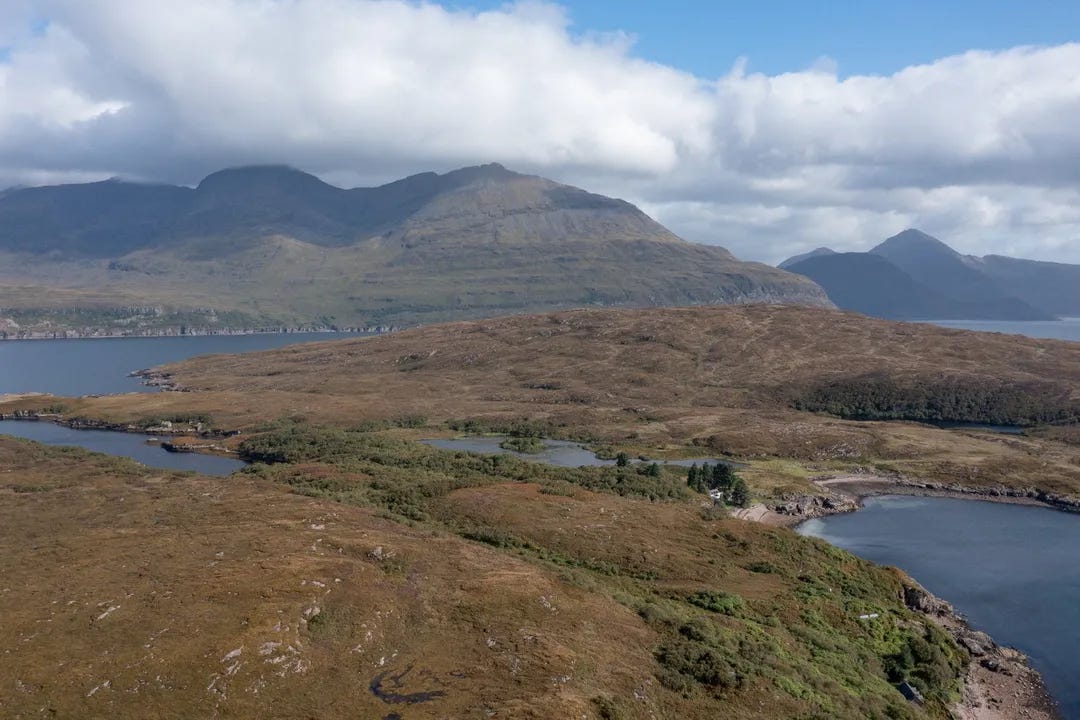
The Highland Clearances had produced what many considered the worst humanitarian crisis on British soil in living memory. Families had been driven from land their ancestors had farmed for centuries, loaded onto ships, scattered across the world or left to starve on coastal margins too poor to sustain them. People died. Many people. It took the government, facing the consequences of a century of sanctioned dispossession, to finally send someone to the Isle of Skye to listen.
In May 1883 a man named Alexander McCaskill sat before the Napier Commission and told them everything about Soay Island.
Five commissioners with notebooks sat at long tables in village halls and church rooms in Bracadale, listening to men who had never before been asked by anyone in authority what they thought about anything. The people giving testimony were Scottish Gaelic speakers testifying through interpreters to commissioners appointed by a government in London.
To get to Bracadale, McCaskill would have crossed Soay Sound in his own boat, landed on the Skye shore, and made his way overland through country that in 1883 had no roads worth the name - tracks through bog and over rock, the great black peaks of the Cuillin still carrying snow at their tips even in May, the wind coming off the Atlantic without anything between it and him for three thousand miles.
His family had been born on Soay - the children and grandchildren of people relocated there during the clearances, placed on land that couldn't sustain them because it wasn't even good enough for sheep. Twenty three households. My family met the government's conditions for assisted passage to Australia. His family didn't.
The Commission heard how those twenty three households were removed to Soay Island and promised crofting rights on land that was not viable for subsistence. They were left there for another seventy years.
Ownership in Scotland is not the same as control over presence, perception, or use of space. It is often not a single unified object, but a stack of overlapping rights systems - not just crofting, but access rights, planning law, and environmental constraints.
The modern private island is not a sealed space of solitude, but a managed intersection between ownership, regulation, visibility, and access. What is sold is not isolation, but proximity to the idea of isolation.
The Conversation I'm Not Supposed To Be Having
There is a live political conversation happening in Scotland right now about who owns the land, who should own the land, and what happens when the answer to both questions keeps being the same small group of people.
It has been running, in various forms, since Alexander McCaskill sat before the Napier Commission in 1883. The Crofters Holdings Act, the Land Reform Act, the community right to buy - each piece of legislation was an attempt to shift the balance.
None of them fully did.
In 2025 the Clan Donald Estate - thousands of acres on the Sleat peninsula of Skye, directly across the water from Soay - came up for sale. The Sleat Community Trust formed a working group to explore a community buyout. They waited five weeks for the documents they needed to assess the purchase. The documents arrived too late for proper due diligence. The bid collapsed three days before the deadline.
The estate sold. The same agents handling the Soay listing handled that sale too.
I watched that process from the other side of the world. I have ancestors buried in that soil. I had no seat at that table and no mechanism to contribute even if I had.
That's not a complaint. It's an observation about a structural gap - one that exists wherever displacement has scattered the people most connected to a place to the other side of the world.
The Scottish land reform conversation is happening without the diaspora. Not because the diaspora doesn't care. But because caring, from this distance, has no operational weight.
That's what I want to change.
So I started thinking about an app.
Something that sits between storytelling and funding - where diaspora connection to a place isn't just sentiment or genealogy, but can be organised into collective action.
Not ownership as nostalgia. Not ownership as symbolism. But ownership as coordination.
A structure where people linked to a place through ancestry, history, or record can pool intent, money, and decision-making into something that can actually move in the real world. Not a petition. Not a fan club. A mechanism.
Because if local communities can organise to buy land, then dispersed communities should at least be able to organise their relationship to it in a way that has operational weight.
What doesn't exist yet is the structure in between. And once you notice that gap, you can't unsee it.
The idea is simple: a platform where places like Soay - or any landscape with a layered history of settlement, removal, and return - are not just static assets on a map, but active nodes in a distributed network of people who are already, in some sense, attached to them. Not legally attached. Not physically present. But still connected in the only way that survives displacement: through record, story, name, and inheritance of attention.
The app doesn't try to replace land law. It doesn't bypass crofting systems, or community trusts, or existing legal structures. It sits alongside them - but it changes what becomes possible inside them.
At the most basic level, it does three things.
It lets people find a place they are already tied to, even loosely, through ancestry, migration history, or collective memory. It lets them contribute resources toward a defined outcome for that place - acquisition, restoration, conservation, or transition into community control. And it gives that collective contribution a structured voice: not ownership of land itself, but participation in the decisions surrounding its future.
Contributors nominate where their stake lands. Someone with MacLeod ancestry nominates Lewis. Someone with Campbell connections nominates Argyll. Someone whose family came off the Midlothian in 1837 nominates Skye. The pool isn't one undifferentiated fund - it's organised by place, which is exactly the point. People aren't contributing to a general cause. They're investing in a specific landscape they're already connected to, and their vote travels with their money.
The reason that matters is timing.
Community buyouts in Scotland keep failing not because the intent isn't there, but because the process is designed in a way that makes intent insufficient. You need documents to do due diligence. You need due diligence to secure funding. You need funding to make a bid. And if the documents arrive three days before the deadline, the sequence collapses - not loudly, not dramatically, just quietly and completely.
The Sleat Community Trust, attempting to buy the Clan Donald Estate on the same coastline as Soay in 2025, withdrew its bid after waiting five weeks for the information it needed to assess the purchase. The timeline that remained was not workable. Whether that was deliberate or administrative is not for me to say. What I can say, from years working in property development, is that a vendor genuinely motivated to sell makes documents available early. That's how transactions close.
The app changes that equation.
A coordinated community with pooled resources and a clear mandate doesn't need to scramble for funding after the documents arrive. It arrives at the table already ready. The information gap stops being a fatal obstacle and becomes simply an inconvenience.
Because once enough people are coordinated, "not possible" stops being a fixed condition and becomes a funding problem.
The legal structure that makes contributor participation real rather than symbolic already exists in Scotland. It's called a community benefit society - a registered cooperative where contributors buy shares at a fixed price, the pooled capital funds the purchase, and shareholders vote on major decisions about the land. One member, one vote, regardless of share size. No single contributor dominates.
This isn't a novel concept. Community shares have funded Scottish pub buyouts, wind farms, and land purchases. The Financial Conduct Authority registers them. Audited accounts are required. The governance is transparent and legally enforceable.
What contributors would hold is not a financial investment expecting a return. It's a legal interest in a real asset, with a genuine vote on its future - what gets restored, how the land is managed, whether heritage tourism or conservation or both.
That's the difference between a donation and a stake.
The app works in both directions.
The diaspora provides the capital; the local community provides the activation - the legal standing, the committee work, the relationships with Highland Council and the Crofting Commission that no one on the other side of the world can replicate from a distance.
Right now, forming a community trust means volunteering for months of thankless administrative work toward an uncertain outcome. The funding may not materialise. The documents may arrive too late. The bid may collapse anyway.
The app changes that calculation. If the capital is already pooled and waiting, the committee secretary in Sleat isn't working toward a maybe. They're working toward a funded mandate. That's a different ask entirely.
The diaspora funds it. The local community activates it. Neither can do it alone. That's the point.
One practical note: as an Australian resident I can't establish a Scottish community trust myself, and I wouldn't need to. The mechanism isn't about personal ownership. It's about arriving at the table with coordinated resources ready to hand to people who have the legal standing to act - bodies like the Sleat Community Trust, who already exist, already have the relationships, and already understand the ground.
The only thing missing is the money being ready when the window opens.
In practice, that means something very simple and slightly unsettling: places stop being privately imagined as belonging to one buyer at a time, and start being publicly engaged with as shared projects - even before ownership changes hands.
Not everyone will like that. That's the point.
Because the assumption underneath most land markets is that interest is passive until purchase. This assumes something else entirely: that interest can be active, distributed, and organised long before a transaction ever happens.
And once that assumption exists, the line between viewer, descendant, buyer, and community stops being stable. It starts to blur. Not loudly. Just enough that it can't quite be ignored.
There are crowdfunding platforms that have been used for Scottish community buyouts before. The Langholm Moor purchase used GoFundMe. Community share offers have been run through Crowdfunder Scotland. The Scottish Land Fund provides government grants of up to £1 million. The Scottish Connections Fund provides small grants to diaspora organisations with Scottish links.
But none of them do what I'm describing here. None of them combine ancestry-based geographic nomination with a standing diaspora fund that is ready before the land comes up for sale, not scrambling after the fact. None of them give a diaspora contributor a legal stake and a vote tied to a specific landscape they're already connected to through name, record, and inheritance of attention.
The closest model is the Isle of Eigg Heritage Trust buyout in 1997, which drew contributions from Scots worldwide - but that was a single campaign for one specific island, not a standing platform that activates whenever land comes up anywhere across the Highlands and Islands.
That gap exists. And once you see it, you can't unsee it.
If that idea interests you - if you have Scottish ancestry and you've ever felt the distance between where you are and where your people came from as something more than sentiment - I'd love to hear from you in the comments.
You don't need to commit to anything. There's no form, no fee, no obligation. This is an expression of interest, nothing more.
Tell me your ancestral surname and the part of Scotland your family came from. If enough people respond, it tells me the appetite is there to build this properly - with the right legal structure, the right governance, and the right partnerships on the ground in Scotland.
That's where it starts.
HERE’S THE PLAN
I didn’t set out to turn this into anything structured.
It started with a listing for a remote island off Skye, and a fairly simple curiosity about what “private island” actually means when you look at it through law, access, infrastructure, and geography instead of marketing language.
But the more I looked at it, the more it stopped being about one island.
It became a much simpler question.
Not whether places like this can be bought - they obviously can - but whether there is any meaningful connection between people who care about these places, and whether that connection ever shows up in real, practical ways when it actually matters.
Because at the moment, it mostly doesn’t.
Or at least, there is no obvious mechanism for it to. So I want to run a very small, informal test of that idea. Not a project. Not a fund. Not a proposal. Just a sense check.
If you’re still reading, you already know the context, so I’ll keep this simple.
I’m curious about three things, and I’m not looking for anything more formal than a comment or a sentence in reply.
First - if any of this resonates at all, where does it point you ?
Is there a place in Scotland - even loosely, even vaguely - that feels connected to you in some way ?
It doesn’t have to be precise or genealogical or well-defined. I’m just trying to understand whether this is actually place-specific for people, or whether it’s just general interest in the idea of “remote Scotland” as a concept.
Second - what do people actually do with an idea like this ?
If something like this existed in the real world in a more developed form, would you:
• follow it casually and see where it goes
• occasionally check in if something interesting happened
• or just leave it alone entirely
I’m not trying to measure enthusiasm. I’m trying to understand whether it sits in the background of people’s attention at all.
And finally - and this is the loosest of the three - what role would you naturally see yourself having in something like this, if any ?
Most people would probably do nothing, and that’s completely fine. Some might just watch. Some might talk about it. A smaller number might actually help shape or organise something if it ever became real.
I’m not asking for commitments. There is nothing being collected, pooled, or built here.
I’m just trying to understand whether there is any real-world signal behind the idea, or whether it only exists in my head because I’ve been looking at one unusually strange property listing for too long.
Even a single sentence in response is enough.
Not because I’m building a dataset, but because I’m trying to see what this looks like from outside my own thinking.
That’s it.
aussiefemmebot writes from Melbourne, Australia, in a New York-style batchelorette apartment in Upper East Brunswick, where she lives with her sighthounds, Fletcher & Millie. She covers constitutional and international law - and the human consequences behind global politics.
Help keep this going for USD $5.00 --->
You’ll be supporting independent legal and political analysis from an Australian perspective that refuses to centre American frameworks.
This newsletter is independent and reader-supported. If my writing has been useful to you, you can buy me a coffee - no sign up, no commitment, simply a one-off contribution - that goes directly toward building out my media studio and keeping two rescued greyhounds in comfort. Every bit helps.
Hit that subscribe button.
Share this with someone.
Leave a comment - I actually read them and respond.
And if you’re on Spoutible, find me there where I’m tracking all this in real time.
I am 17 Correspondents away from finishing my media studio and putting out the most serious work of my life. If you subscribe to my Correspondent Level you’ll get exclusive access to deeper dives.
Correspondents subscribe annually at $80 USD.
Browse the archive - there’s plenty there on international law, Westminster systems vs American exceptionalism, and what happens when a non-party state faces binding treaty obligations.
The record doesn’t stop. Neither do I.
That's an interesting proposition not totally different from land back initiatives — or class action. A documented, committed group of people who have a vested interest is a good start, and a healthy amount of capital is much better. It enables the community to purchase, or even to litigate. Which might be one pathway, if it looks like bureaucratic obstruction has been intentional.
There's a big difference between land ownership in the English sense and that in the Nordic, or, say, Native American sense. Where there have been no kings, the land ownership isn't isolation - you may have everyman's right like in Finland - anybody can roam in your forest and pick the berries. And in ancestral lands that aren't money making machines, it's more about stewardship than sole possession.
I hope you find the right people and if you need help with anything in the lines of design - from graphical design to service or systems design, let me know. I'm happy to do pro bono for people or causes I like.